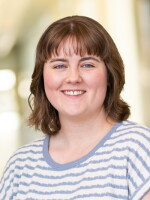
NEUFELD: Doctor Hammad, I know you're a cardiologist here in Pittsburg, but your specialty is interventional cardiology, is that correct?
HAMMAD: That's correct. We practice non interventional cardiology as well, but my specialty is interventional cardiology.
NEUFELD: What exactly does that all entail?
HAMMAD: So interventional cardiology mainly deals with coronary artery disease, is what we do. Treating coronary arteries that have gone bad and are causing angina or heart attacks or causing heart failure. We treat them– we open them up, we improve blood flow to the heart muscle. That takes care of the patient's symptoms of angina and so forth. It also improves the functional capacity of the heart. If the heart’s weak, it improves its pumping ability. When we say intervention, we basically mean coronary intervention. But I also am certified in doing devices. So that means that I also implant pacemakers and defibrillators, so that's another intervention that we do. So the kind of intervention that I personally do would be coronary intervention, which would be balloon angioplasty and stenting, and electrophysiological intervention, which would be the implantation of devices. But I'm not an electrophysiologist, though. That's a separate specialty. So I don't do ablation and stuff like that. I do implant devices, though.
NEUFELD: I see. And as I understand, you were sort of one of the first cardiologists here in Pittsburg, kind of got the cardiology program started here. What did that take to get that kind of care here in Pittsburg?
HAMMAD: Yeah, that is true. I mean, when we started out, the hospital here, that was then called Mount Carmel, they did not have a true cardiology program. There were people coming in primarily from Joplin, cardiologists who would probably come in once a week or at the most twice a week. So it was sort of an outreach territory for them. I was the first one to come here and live here as well. So we started a program that was kind of a 24/7 type of deal, which was very hard for me to run by myself. But in a couple of years Dr. Marji joined us, so then we were the two of us, and we were able to maintain a 24/7 program. Before Dr. Marji came, I had kind of convinced the hospital administration to open up a cath lab over here, so we had started to do heart caths. When the program became more complete because we had two cardiologists here, then we were able to utilize the heart cath lab more, and we started to do interventional procedures here as well.
We started out with doing diagnostic procedures such as heart catheterization and so forth, but for intervention, we would take our patients to Joplin. But soon enough we were actually doing interventions right here in Pittsburg, and we've continued to do that for a number of years now. And we have actually established, if I may say so myself, a good track record. We do a fair number of interventions per year, and we have been able to do it without complications or transfers. I won’t say that there has not been any transfers, but hardly any transfers for complications to Joplin. Joplin has been supportive. Now we are actually, the current situation is that we are part of the same big hospital system, which is Mercy. So that makes it easy. We can send our patients quickly to Joplin if need be and so forth. So it's been helpful. But to answer your question, yes, we started this program back several years ago, and there did not truly exist a cardiology program here before then.
NEUFELD: How much does it benefit the people here in Pittsburg that they can get their care here in Pittsburg?
HAMMAD: Yeah, obviously people want to know their physicians and they want to have their care close to home. So I think that this has benefited people quite a bit. I see that most people, at least in my estimation, I don't have any numbers on it, of course, but in my estimation, most people do not cross the state line or travel north for cardiac care. Now, of course, if a patient has a condition that we feel that cannot be treated here, then of course, we refer them out. But, any condition that can be treated here, people just come to this hospital and they just, I think they're happy to have local care.
NEUFELD: How has cardiology changed in the time that you've been here?
HAMMAD: So the changes in cardiology are that the equipment that we have for intervention is easier to use and produces better results. That's one. And then the devices that we use are also advanced in their capabilities of the kind of things that they can do. And then, this whole idea, particularly of atrial fibrillation ablation is relatively new. And we have been able to successfully acquire it at this hospital and are offering it. So several advancements have occurred, and I'm just talking only about interventional cardiology here. There have been many advances in medications as well in the last 25 years. A lot of new medicines have come forth which have really been very helpful in treating conditions like congestive heart failure, cardiomyopathy– weak hearts, that is. And I think that has been a huge advancement in the field of cardiology over the course of the last 20 years, 25, maybe.
NEUFELD: Yeah. What are some of those better results that you've seen?
HAMMAD: Well, one of the better results in terms of medications is that we can manage heart failure so much better. Firstly, we understand it better, secondly, we can treat it better. People's lifespans have increased with the kind of medication that we have now. Their symptoms are less. So previously, a person with a weak heart would not live long, and also whatever life they had was difficult because they would not be able to do things. You know, short of breath and not be able to do the kind of things– even activities of daily life would be hard for them. And now things have changed. I think we have most people, even with weak hearts, we can give them medication that would take care of their symptoms and also improve the functional capacity of the heart. So not only would they live longer, but they also live better lives, more comfortable lives.
NEUFELD: What's something you wish people knew about heart health?
HAMMAD: I think people are pretty smart these days. I think they know a lot about heart health. Obviously the common sense stuff is to just firstly be aware of cardiac symptoms. As people age, the most common cardiac problem is coronary artery disease, and people should be aware of the symptoms. So, it can not just be chest pain. It could be fatigue. It could be shortness of breath. It could be just the lack of energy and weakness. Especially in women, symptoms are quite different from what they are in men. So, in textbooks, mostly our older textbooks, they describe these symptoms of chest pain and angina, based mostly on male populations. But women may not experience symptoms like that, and especially if they're diabetic, you may not have symptoms of chest pain. You may have other symptoms, which can be fatigue, weakness, tiredness, something like that. So these are things that you need to keep in mind.
You need to also be aware of what are called the risk factors for coronary artery disease. There are several risk factors. Some are modifiable, some are not modifiable. The non modifiable ones are genetics, those we can't modify. But the ones that are modifiable you need to keep in mind. One would be, probably the most important, would be diabetes avoidance, type two diabetes. How to avoid that would be to keep weight in the normal range, be physically active, do regular physical and body examinations with your primary care physician. Just be sure that you're not going down the path where you may develop type two diabetes, because that is a major risk factor for heart disease. The other is avoiding tobacco and vaping as well. I think both of these, because smoking has been replaced by vaping in young people. Those both ought to be avoided. The third risk factor is hypertension. That's easy enough to know about I think. That just takes a visit to a doctor's office to know what your blood pressure is, or probably you can even do it on your own. So you need to know whether your blood pressure is normal or not. And another risk factor is cholesterol. So I think people should get the screening for cholesterol as well. So those four or five things, I think people should be more cognizant of than they are. Smoking, blood pressure, diabetes, activity, body weight.
NEUFELD: The smoking and vaping, I was wondering, obviously, people associate those usually with lungs, so how does that affect the heart?
HAMMAD: That is a good question. To describe the molecular biology of that would be a little hard, but nicotine and tar and carbon monoxide, they do provoke atherosclerosis, which is the buildup of plaque within the heart arteries and blood vessels. So it's bad, but not just for the lungs, but also for your circulation and the heart. And not just the heart, but also the rest of the circulation as well. A lot of people have disease in their leg arteries. That's a common problem especially in smokers and can be avoided by not smoking.
NEUFELD: Yeah. Is there anything else that are sort of everyday things people can do to help keep their heart healthy?
HAMMAD: Yeah, I think that one of the things that I feel that people perhaps don't do enough is activity. In other words, physical activity. I think they should be out. People should be out and about and doing things. I think that modern culture is such that a lot of things can just be done from home and can be done online. So that I think has kind of discouraged activity, physical activity within individuals. So I would encourage people to be out and about, do things, be physically active, even if you don't necessarily go for exercise. Even if you don't have an exercise program, just being out and doing things physically will help the heart stay healthy.
NEUFELD: Is there anything else you'd like to add that’s maybe popped into your mind that I haven't asked about?
HAMMAD: No, I think we've had a very detailed conversation. I can't think of anything else right now.
NEUFELD: Awesome. Thank you for talking with me.
HAMMAD: Thank you very much. I appreciate your time.
Copyright 2026 KRPS. To see more, visit Four States Public Radio.