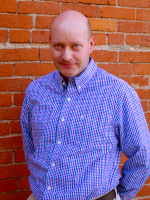
Working in home healthcare, Marci Bacon often helps people with little to no insurance. When they’re looking for medical supplies within their budget, she sends them to the Wichita Medical Loan Closet.
But a few years ago, Bacon lost her health insurance for a short period of time. She has a daughter with autism who, like many with sensory issues, uses a feeding tube for nutrition. The cost of those supplies — the syringes, feeding tubes and her daughter’s favorite nutritional shake — started to add up.
Bacon turned to the medical loan closet herself to get help. Even now with insurance, the supplies can be expensive for her family.
“Insurance will only cover up to so much a month,” Bacon said. “If my daughter decides that she wants to go through more than a case of formula, I would have to pay for that out of pocket. It may cost $70 just for 12 bottles of formula.”
Now, she serves on the loan closet’s board and works to raise awareness about the organization. It’s hard for Bacon to imagine life without the loan closet.
“I am a one person income, and would not be able to afford the health care and the cost of the formula, as well as just the regular cost of living,” Bacon said. “I think there's a lot of people that don't understand this is a value to them and that there's this option.”
Medical loan closets operate across Kansas, run by non-profit organizations, food pantries and churches. They take in donations of medical equipment like wheelchairs, hospital beds and feeding supplies. Then, they distribute the equipment for little or no cost.
Sometimes, someone might temporarily need a knee scooter to help recover from a foot injury. Others might need a wheelchair permanently to help them stay in their home, instead of going to a long term care facility. With medical costs rising, more people are turning to loan closets to help.
“This stuff is stupidly expensive,” said Drew Brenner, CEO of the Wichita Medical Loan Closet. “Medical equipment is awful, awful expensive. And if you have to make a decision whether you eat dinner, or you are mobile in your home, most of the time you're going to choose dinner because food is life.”
Lloyd and Elaine Hanna started the Wichita organization in 2012 after they saw loan closets on a Barbara Walters television special. It’s grown from 50 loans a year out of the family’s garage, to more than 25,000 loans so far this year.
Brenner said the average piece of home medical equipment lasts over five years. But often, it is only used for four months while someone recovers or before the person using the equipment passes away. Rather than sitting in a garage or closet, this equipment can be donated and used by others.
“It could be a week, it could be a month, it could be 10 years, it could be end of life,” Brenner said. “It doesn't matter, you can borrow it for as long as you need.”
Abby Azeltine, director of the Kansas Equipment Exchange, said there’s an increasing demand for this equipment as Americans age. Two in five adults are 65 or older, and one in four adults live with a disability, she said.
“We are spending about $56.2 billion on durable medical equipment, which is actually a 54% increase from 2018,” Azeltine said. “There's an increase in folks that are needing durable medical equipment, which is why you see the increased demand and cost.”
The Kansas Equipment Exchange is a statewide loan resource, based out of the University of Kansas. The organization partners with Kansas Medicaid and six regional offices to serve the state.
The program started in 2003. Since then, it’s gathered $32 million dollars worth of equipment and handed out almost 15,000 devices.
Azeltine said they try to match people with the right equipment, as well as provide them training on it.
“We also have things for vision and hearing, daily living, accessible toys for kids,” Azeltine said. “We are truly like a library. People can borrow technology, and the thought process behind that is to try it before you buy it.”

As the state’s population ages, people can benefit from these organizations. Libby Hastings, with Kansas Advocates for Better Care, said 75% of older adults want to stay in their homes. To do this, they often need expensive medical devices.
“A lot of folks, especially older adults, are on a fixed income,” Hastings said. “They might not have the ability to pay for that medical equipment to be successful in their homes. These organizations help bridge the gap between the need of an individual and the affordability of medical equipment.”
People in rural Kansas can face even more medical costs for this equipment because there aren’t many local options.
“There's a lot of resource deserts in the rural areas of Kansas,” Hastings said. “If you live in these more rural areas, you might not have the transportation to take you to a bigger city where you can purchase medical equipment and assistive technology. If there's a loan closet in the area, you have readily available access to medical equipment.”
Pamela Ford runs the Hope Center in Pratt. She said the medical loan closet is their most popular service. The county’s hospital serves a large region, so they get patients from around the state looking for help.
“It could be a kiddo that just hurt themselves on the playground, or a person that's 101 and needs a wheelchair,” Ford said. “To have this here in our small community, where the folks can just get it right here at home and take equipment with them, it's a big help to everyone around.”
Medical loan closets face many of the same challenges other nonprofits face today in fundraising and promotion. Dan O’Neal, marketing and media director of the Wichita Medical Loan Closet, said most people learn about them through word of mouth.
The Wichita closet is looking to create a state-wide network of these agencies to share ideas and solutions. O’Neal said one thing that’s been successful is getting out into the community through pop-ups at events. Recently, they set up a tent at Wichita Riverfest, offering wheelchairs and mobility equipment for people to enjoy the festival with their families.
O’Neal remembers one client, who was struggling to make it around with his walker.
“We got him over the tent and got him fitted into a mobile chair,” O’Neal said. “As he rolled off the sidewalk into the street, he stopped and looked back. Then, he said, "I'm free.” That said it all. That's a good mission statement right there.”
Roger Nomer reports from the Wichita area for the Kansas News Service. You can email him at nomer@kmuw.org.
The Kansas News Service is a collaboration of KMUW, KCUR, Kansas Public Radio and High Plains Public Radio.
Kansas News Service stories and photos may be republished by news media at no cost with proper attribution and a link to ksnewsservice.org.